Part one of the Scotland adventures!
This friday I went on a bus tour hosted by the university. It was a part of the Oriantaion Programme and I had to sign up in advance. There were six different tours and you could sign up for one of them. It was first come, first serve, so by the time I signed on two of the tours were full. I googled the places and settled on Falkland Palace and St Andrews of the tours that were left.
Falkland is a small village, formerly a royal burgh, located in the county of Fife. It has a population of between 1000-2000 inhabitants.
The main attraction of the City is the Falkland Palace. Falkland Castle was built some time in the 12th century and used primarily for hunting. In the 14th century the castle came into the hands of the Scottish Crown. In the early 16th century James IV and James the V made the castle into a beautiful palace in the french renaissance style. It is one of two palaces in Scotland furbished in this style.
The palace was a popular hunting resort with the Scottish Crown in the 16th and early 17th century. After a fire in the mid 17th century the Palace and the village along with it were neglected and fell into disrepair.
In 1887 the keeper of the Palace, the by then millionaire John Crichton-Stuart, 3rd Marquess of Bute, started restoring the Palace in all it renaissance beauty. His sons continued his work until the 5th Marquess of Bute appointed the National Trust for Scotland as Deputy Keepers in 1952. Today it is the National Trust who takes care of the Palace and its extensive gardens.
There is also a tennis court here, or a
Real Tennis Court, because apparently there is a difference. Built in 1539 it is the world's oldest tennis court still in use, and home to the Falkland Palace Royal Tennis Club.
We weren't allowed to take pictures inside, but a quick search on google yielded some images.
 |
| This is the chapel, picture found here. |
 |
This is the Queen's Bedroom. It is not in its original place, but refurbished this way by the keepers of the Palace.
Picture found here. |
 |
This was originally a guard chamber or a chamber used by the priests as it is directly above the chapel.
The keepers of the palace made it their own room and filled it with their own stuff. Picture found here. |
Over to St. Andrews! St. Andrews is a town on the east coast of the county Fife. It is home to the University of St. Andrews, the third oldest university in the English speaking world, the oldest university in Scotland and one of the most prestigious in Britain. During term time students make up one third of the population.
St. Andrews is also known as the "home of golf," partly because the Royal and Ancient Golf Club of St Andrews is the one who have legislative authority over the game worldwide (except the US and Mexico). Golf doesn't really interest me though, I went to see the old Cathedral.
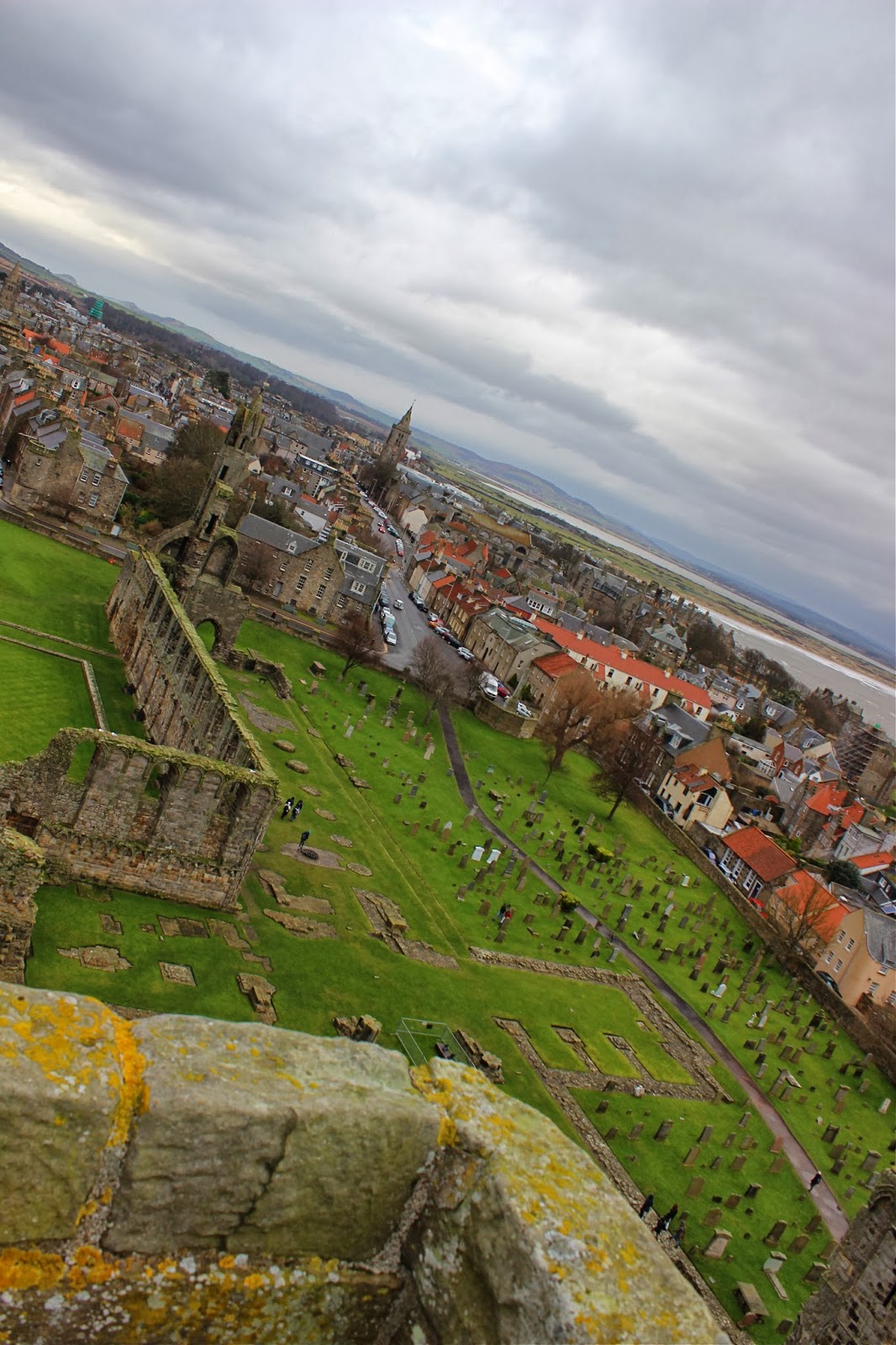
St Andrews Cathedral is now a ruin. It is a Roman Catholic cathedral built in 1158. It fell into disuse and ruin when Catholic mass was banned in the 16th century. The ruins indicate that the Cathedral was over 100 meters long, and it is the largest church ever built in Scotland.
I wandered around the grave yard and the ruins of the cathedral.
 |
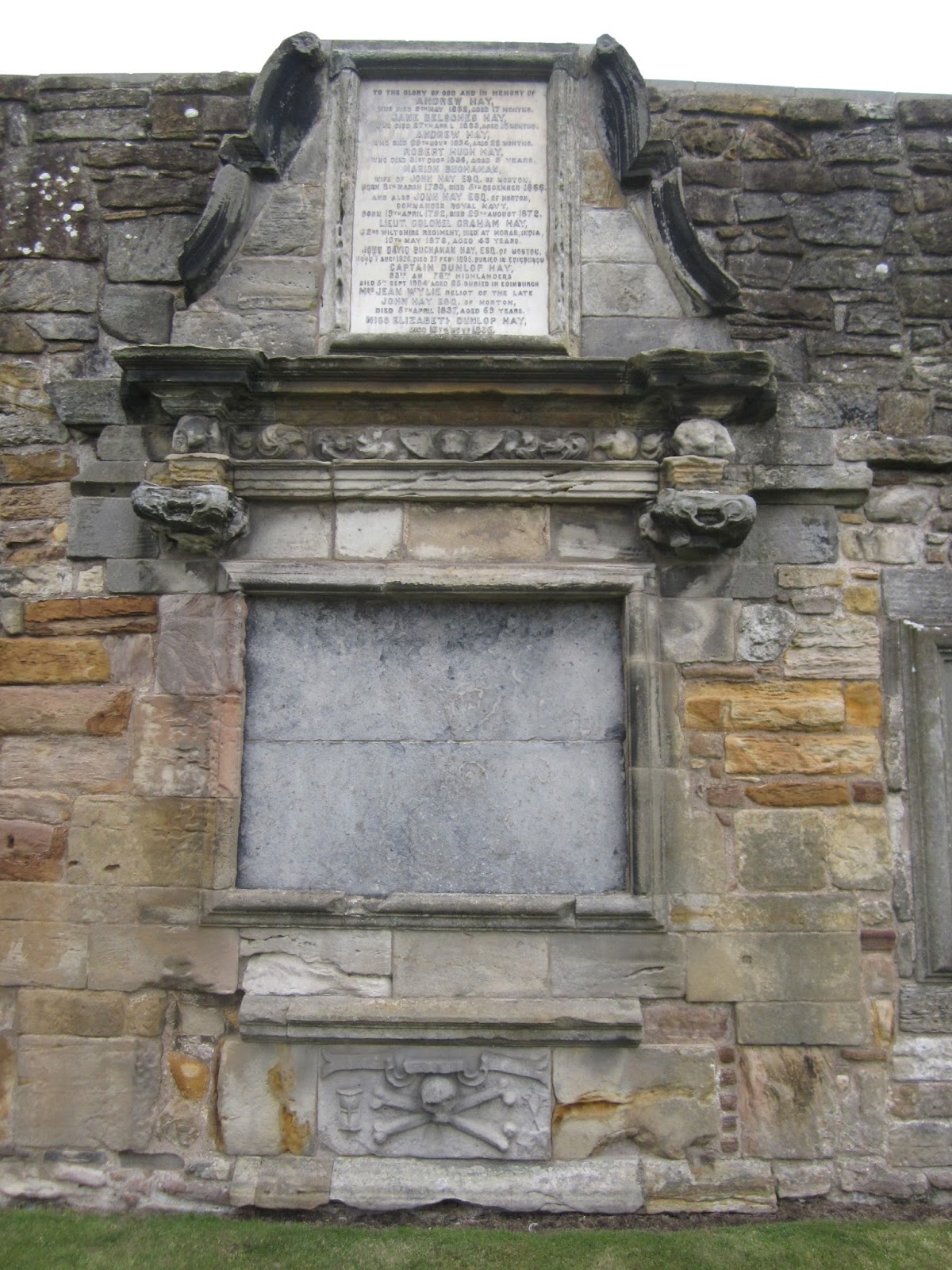
| Some of the grave markers were embedded into the wall. I think it made them seem really old. |
 |
| Suddenly, Aslan being killed on a stone table made a lot more sense. |
 |
This is St Rule's tower, and I think it predates the church.
You could go inside but I didn't have the time or know where to buy a ticket. |
 |
| The picture above and below is the entrance to the cathedral, before and now. |
There were also some castle ruins nearby, but I didn't have the time to look at them. Maybe some other time.